
Talented vs. Traditional Lessons: Can an App Really Replace a Teacher? (A Balanced Look).

Introduction Challenges and Opportunities in the Digital Age of Education
New demands that modernity places on education-as rapidly changing technologies force them to reassess established approaches to teaching methods. On the one hand, broad horizons that digital tools open-up: accessibility, interactivity, and scalability. On the other-a number of questions arise concerning the preservation of the depth of knowledge and human contact. Being engaged in the development of a music learning app, we observe changes in the role of the teacher and student under the auspices of digital innovations. This is a classic case for blended learning and a balanced review of instructional methods, teaching efficacy, and learning outcomes in an app vs teacher context. For readers exploring options, many piano learning apps free paths exist within modern education technology and digital tutoring ecosystems.
The characteristic features of the digital age in education can be pointed out as follows:
- Anyplace and anytime access to learning materials.
- The process is personalized, and the algorithms adjust the process to each student’s level and interests.
- Visualization and an interactive immersion in complex themes, which could not be represented by a standard textbook.
- However, it is the growth of the risk of superficial knowledge perception and a decrease in motivation if not supported by a live teacher.
Thus, digital solutions-not just another tool, but a challenge for traditional methodology-require responsible reflection and a balanced approach in implementation. This invites app comparison and evaluation using criteria like educational value, lesson quality, practice support, student engagement, and cost-benefit analysis guided by expert guidance.
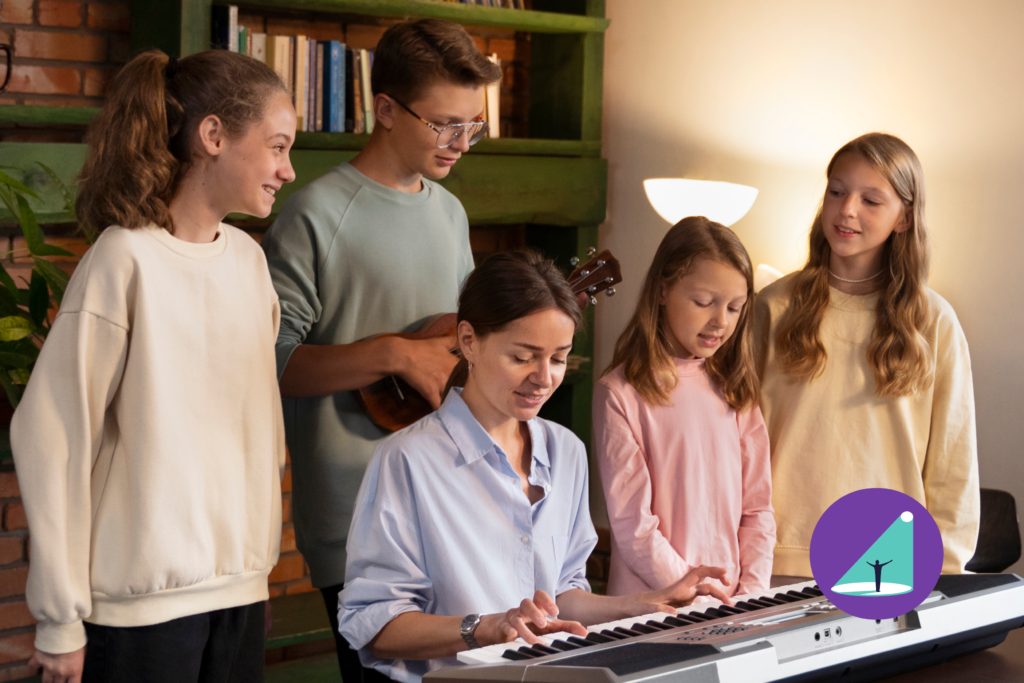
Traditional Lessons The Power of Live Interaction and Pedagogical Experience
The contribution of traditional lessons to the development not only of knowledge but also of the students’ personal qualities is not overestimable. Live communication with the teacher is not just the information exchange; it is a continuous process:
- Real-time feedback: the teacher provides instant error correction, makes adjustments according to students’ mood and level.
- Emotional contact: motivating and supporting during difficult learning moments.
- An individual approach, based on the teacher’s experience and intuition, takes into consideration the peculiarities of each learner.
- It includes developing communications skills and working within a team.
This is much more important in music education: the live performance or the subtleties of intonation and articulation often cannot be fully conveyed through an app. Not only is musical notation seen by the teacher, but even the emotions a student invests in the music can inspire and lead creative energy.
Comparative Overview
| Advantages of Traditional Lessons | Limitations of Digital Music Apps |
| Immediate teacher reaction | Feedback delay, lack of empathy |
| Individual work with emotions | Standard algorithms without personal nuances |
| Possibility of ensemble playing | Monotony of solitary interaction |
An active role of a teacher combined with advanced technologies is the optimal path towards effective learning, where each element will play its unique role. This reflects traditional teaching strengths within a blended approach that aims for higher teaching efficacy and stronger learning outcomes.
Educational Applications Innovations, Accessibility, and New Learning Formats
Not simply an addition, but a tool that has the potential for transformation of the learning process in itself, educational applications become in the era of digitalization. Their main strong points are:
- Accessibility. means that at any time and in any place, knowledge can be acquired, and it is most valuable for residents of remote regions or people with limited schedules.
- Individualization. Applications tend to become tailored to the student’s level and pace and also offer individual tasks and suggestions.
- Interactivity. Gamification, video materials, and simulations are utilized to promote deeper assimilation of the material.
- Richness of formats: from textual lessons and tests to audio and video — such a variety of formats allows one to choose the most efficient way of learning.
Applications also open up access to international educational programs and courses that were hard to provide in traditional schooling.
It is important to consider, however, that technological solutions are but tools. More flexible and more engaging they make learning, but to fill the gaps caused by the lack of live communication and instant feedback, they just are not always able. In evaluation terms, this is where Talented vs lessons discussions often surface in an app comparison of instructional methods and practice support.
What Can and Cannot Be Replaced by an Application in the Learning Process
The temptation to replace the teacher fully with an application is great, but the reality is more complex. Where the applications are truly effective and where they fall short will be examined:
Replace
- Repetition and reinforcement of material. Educational programs are ideal for practice and to test one’s skills.
- Access to big volumes of information: Applications make it possible to find necessary knowledge quickly and allow self-education.
- Primary level of learning. Basic concepts and theory can often be mastered with the help of educational platforms, not necessarily requiring the direct involvement of a teacher.
Cannot Be Replaced
- Live communication and emotional contact. The teacher sees the student’s reactions, motivates and supports in difficult situations, which is very hard to automate.
- Situations requiring creative approach and critical thinking. Despite technological progress, applications are not yet capable of flexibly adapting to unconventional tasks.
- Development of social skills. Communication, teamwork, and empathy form within a group, not through a screen.
Thus, educational applications represent a strong addition but not a full replacement for the teacher. Their strength unfolds through proper use when combined in a live pedagogical process — a blended learning model that maximizes educational value and lesson quality.

Psychological and Social Aspect The Role of the Teacher in the Motivation and Development of Students
No application, especially when motivation and emotional support are concerned, is able to fully replace live communication between teacher and student.
The psychological needs of students involve a complex set of elements that include:
- Emotional engagement
- A feeling of being supported and appreciated
- An approach appropriate to the child’s individual personality and mood
In this sense, the teacher will be playing a role not only as a knowledge transmitter but also as a psychologist, mentor, and inspirer: helping to bring up the social environment that is formed in the classroom, developing communication skills, and teamwork ability.
School for many students serves as a place of learning and socialization, which cannot be emulated through a screen.
Important Functions of the Teacher
- Observation of students’ emotional condition
When a child is tired, depressed, or upset, this is seen and felt by the teacher, who is then able to intervene promptly or offer help. - Individual motivation
Quite often, support, praise, and even constructive criticism from a live person work much more effectively than automated reminders and points in an app. - Creating a safe educational environment
Students feel more confident in an atmosphere of trust and respect, opening themselves to new ideas without being afraid to ask questions. - Developing emotional intelligence
Empathy, dialog skills, conflict resolution develop through communication with the teacher and peers—that which cannot be gained exclusively through an app’s interface.
Social aspects of group learning supervised by the teacher should not be underrated: a collective project, discussions, debates, and role plays create a very special experience that applications can complement but never substitute. Thus, the psychological and social role of the teacher is the basis upon which successful learning is built, and technology should serve as support, rather than a substitute for the live involvement of a person in the educational process. Framed as evaluation, this underlines expert guidance and teaching efficacy that are difficult to automate.
Conclusions When Application Becomes an Assistant Not a Replacement for a Teacher
In modern education, the line between traditional lessons and digital technologies is blurred, yet the task of fully replacing a teacher with an application is far from trivial. That can be summed up in highlights whereby an educational application is precisely used as an auxiliary tool rather than a full replacement for a live educator.
- Applications individualize the learning process. Adaptable to the level of knowledge and to the pace of mastering the material, applications let every student work in a comfortable rhythm. Yet, many nuances related to the emotional state, interests, and personality traits of the learner are seen and taken into consideration by the teacher alone.
- Remote platforms and mobile applications extend the bounds of access to knowledge: the open doors at any time and every place, which is of especial value for far-off regions and for students who are quite busy. Meanwhile, the teacher plays the role of a navigator who helps structure the information and hold attention to what is really important.
- Another point that one cannot forget is the importance of live communication and support provided by the teacher, motivation, and social interaction. Motivational speeches, discussions, collective projects create an atmosphere of engagement and trust that cannot be synthesized by any algorithm.
Thus, the main signs of effective interaction between teacher and application can be formulated as:
- The application complements rather than excludes: It helps in systematizing knowledge, offering exercises in an interactive way but not substituting for human assessment and correction.
- The teacher acts as a facilitator and mentor in coordinating the learning process, providing feedback, and considering emotional and social aspects.
- Flexibility and adaptability: technology in conjunction with the personal approach allows creating the most favorable conditions for the development of each student.
In the long-term perspective, the educational application becomes that very tool contributing to enhancement of the teacher’s potential, releasing him or her from the routine and giving full attention to the creative and humane side of pedagogy. To think that the live educator can be fully replaced by technology would be an oversight-their strength consists in harmonically complementing traditions and renewing the educational process. This is where Talented vs lessons debates, traditional teaching perspectives, and evaluation frameworks intersect to support a blended approach that optimizes teaching efficacy and learning outcomes.